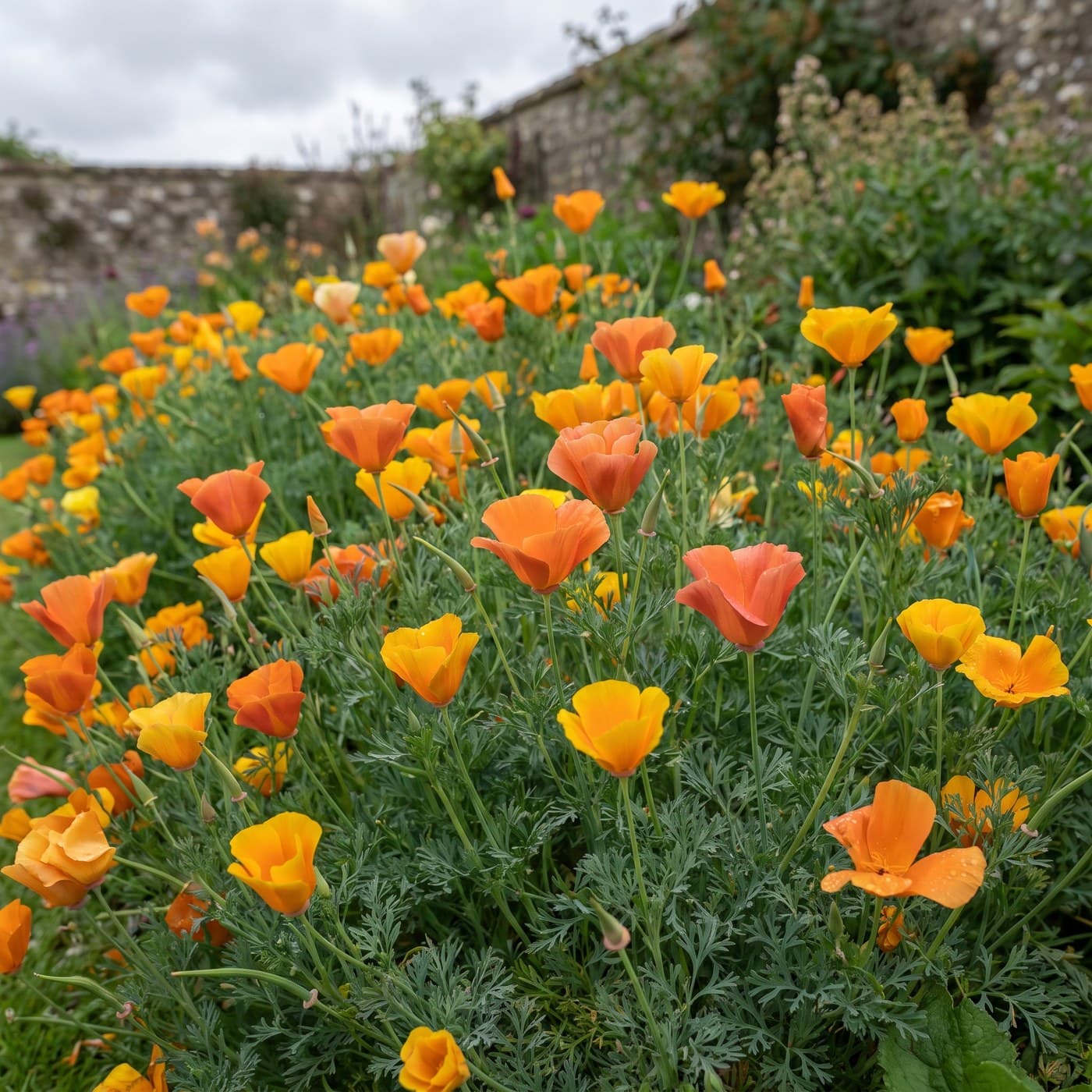
California Poppy Seed Pack
Eschscholzia californica
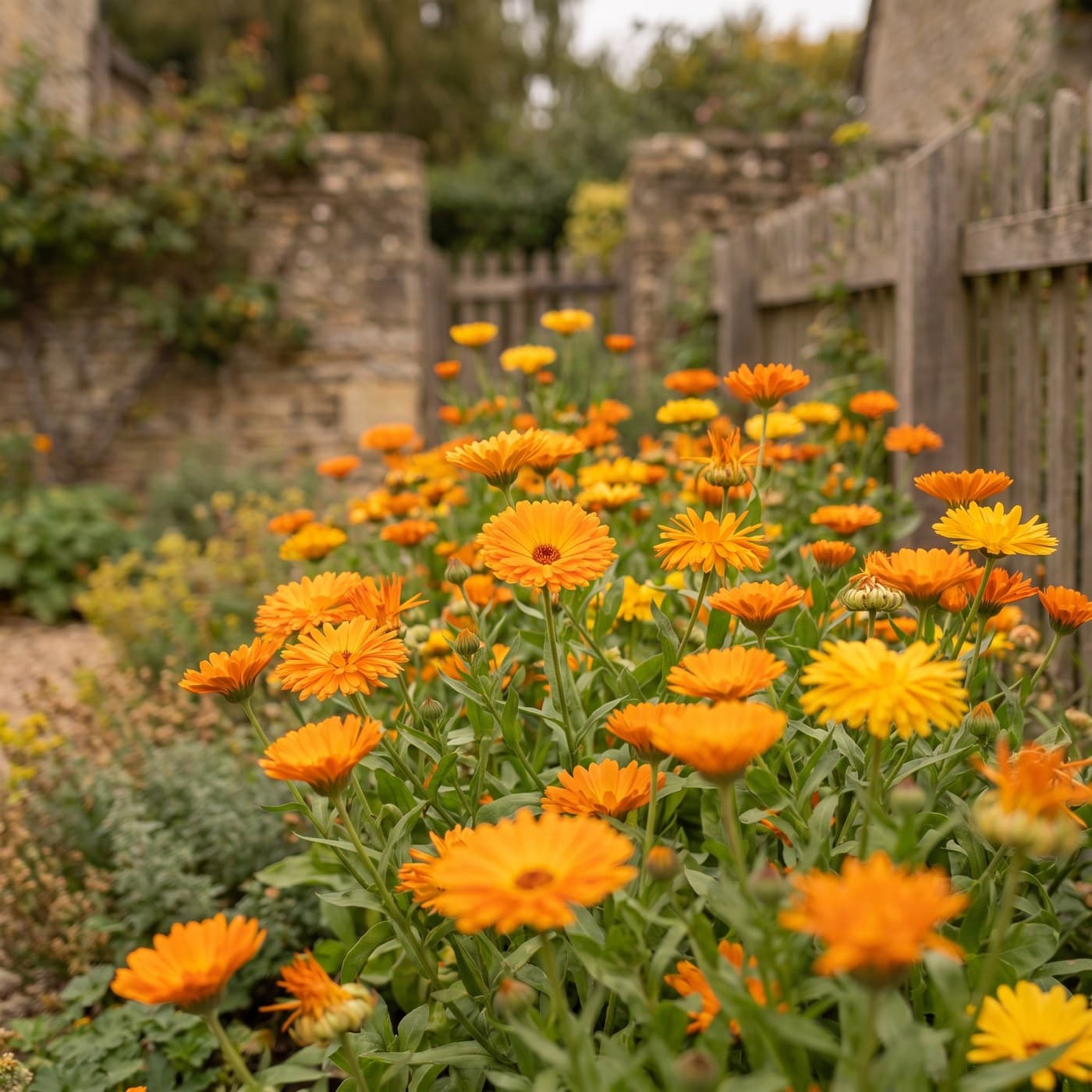
Silky orange cups that thrive on poor, dry soil.
1,000 seeds per pack · one-off purchase, no subscription
- 1,000 seeds, hand-packed in a labelled inner packet with a printed quick-start card
- Dispatched within 1–3 business days, tracked, to any UK address
- Germination guarantee: if they don't sprout, we send them again
Why grow it
- The specialist for bad ground: thin, dry, stony or sandy soil produces MORE flowers, not fewer — rich soil just makes leaves
- Silky, sun-catching orange cups over blue-green ferny foliage, self-seeding into the same spot for years
- Sown straight where it will flower from March — no pots, no transplanting — it blooms from early summer
When to sow
Sow straight outside from March — it hates transplanting.
| Scotland & the North | Sow straight outside from late March — it hates transplanting |
|---|---|
| Midlands, Wales & Northern Ireland | Sow straight outside from March — it hates transplanting |
| South of England | Sow straight outside from March — it hates transplanting |
Growing questions
Why do you keep saying poor soil is better?
Because it's true, and it's unusual: in its native range Eschscholzia grows on dry, stony, low-fertility ground, and it keeps that preference in gardens. Rich, fertilised soil pushes it towards foliage; thin, sharp-draining soil pushes it towards flowers. Skip the compost and the feed entirely.
When should I sow it?
From March, straight where it will flower. It isn't fully hardy as a seedling — the RHS lists it among the annuals that want cover through hard frost — so a spring sowing is the reliable route. Keep the envelope cool and dry until then; the seed keeps perfectly.
Why can't I start it in pots and plant it out?
The tap root. California poppy drives one straight root down almost immediately, and disturbing it checks or kills the plant — which is why transplanted trays disappoint. Sow direct, thin the seedlings where they stand, and leave the roots alone.
Will it come back next year?
Usually, by its own effort: let some of the long seed pods ripen and split, and it self-seeds readily into the same free-draining spot. Established colonies in gravel gardens carry on for years with no help at all.