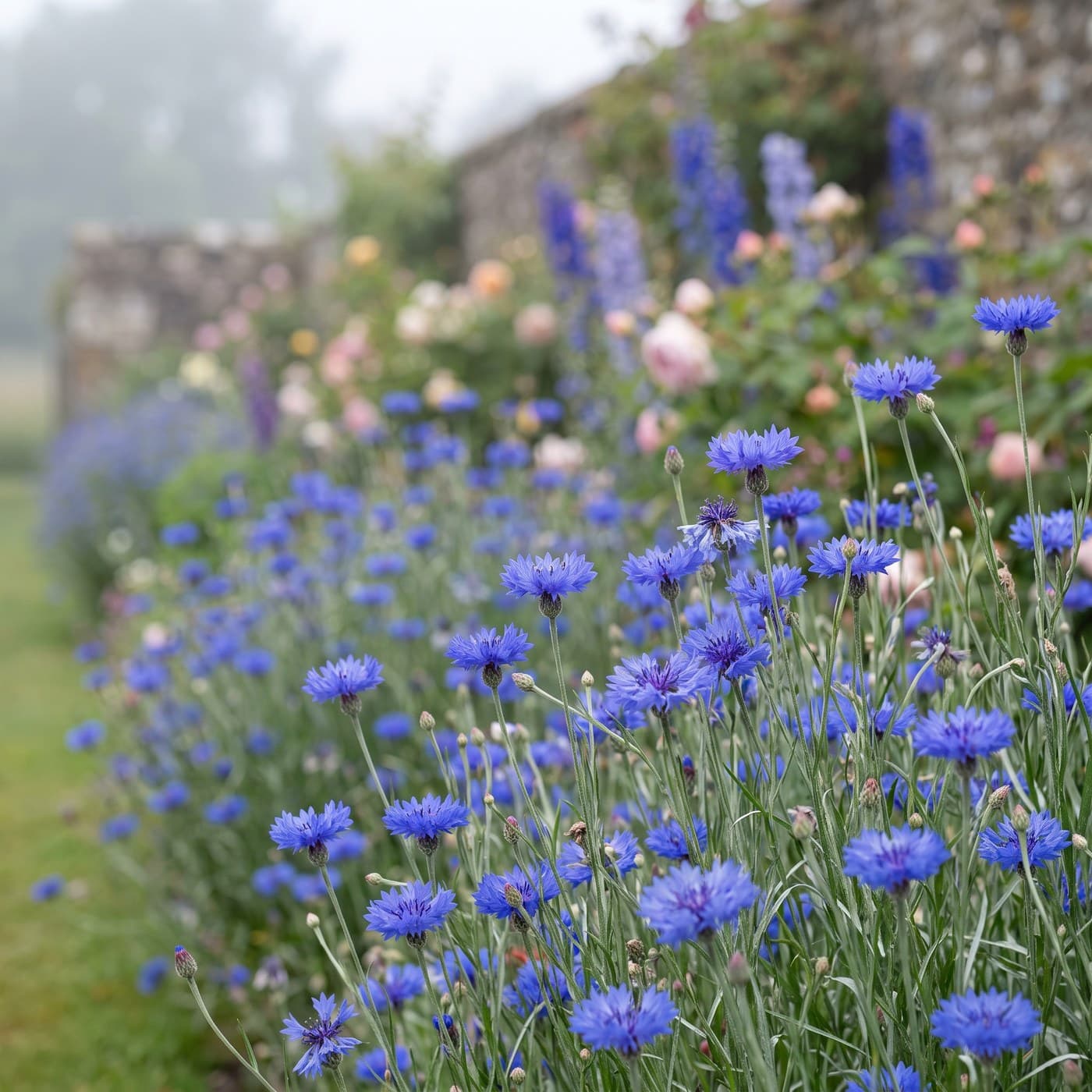
Cornflower Seed Pack
Centaurea cyanus
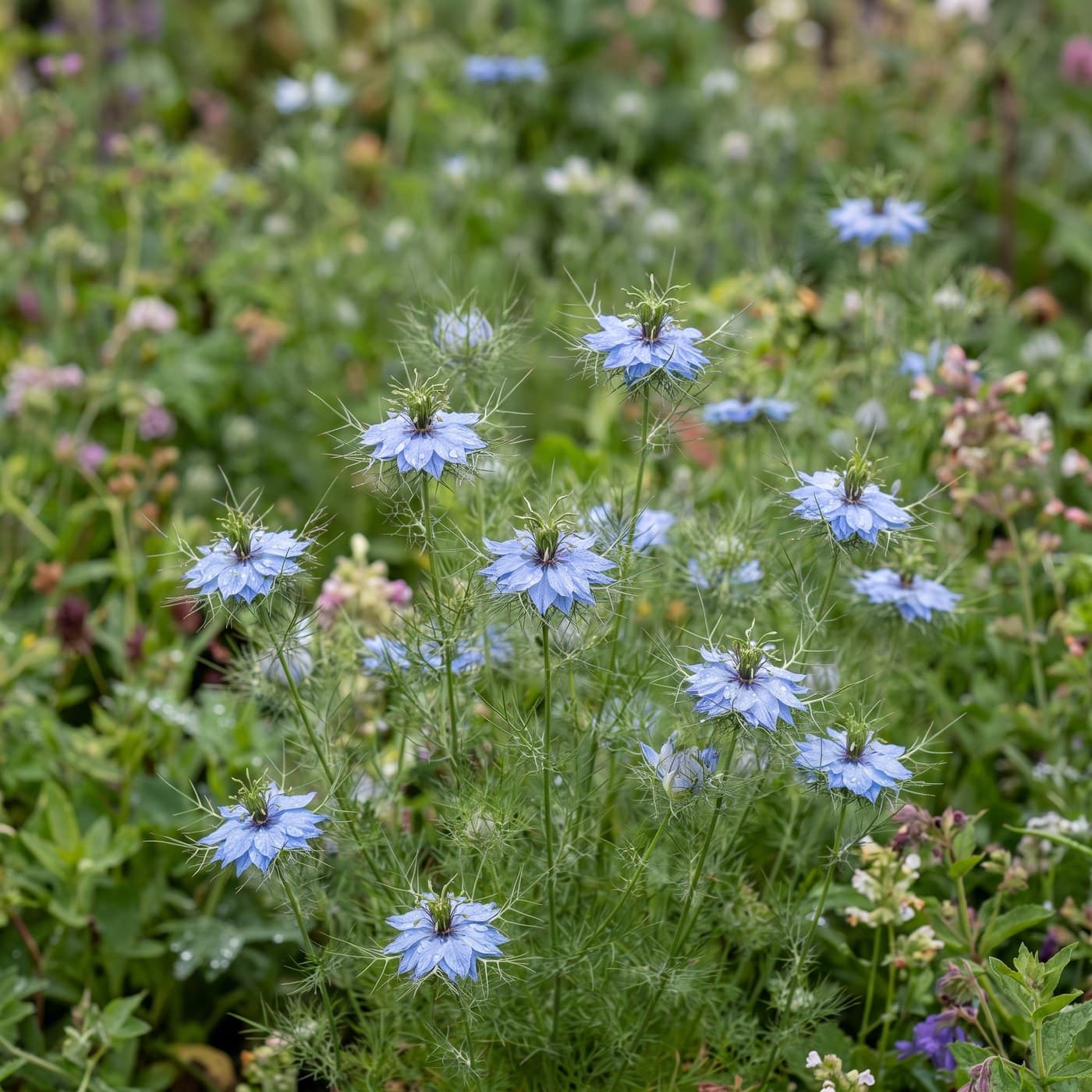
The bluest flower in Britain — blue all summer.
1,000 seeds per pack · one-off purchase, no subscription
- 1,000 seeds, hand-packed in a labelled inner packet with a printed quick-start card
- Dispatched within 1–3 business days, tracked, to any UK address
- Germination guarantee: if they don't sprout, we send them again
Why grow it
- Fully hardy: under a cloche now for a head start, or straight outside from March — blue from early summer
- Straight into the ground, no pots, no greenhouse — cornflowers are fully hardy and prefer not to be transplanted
- Bees love the open blue flowers, and the stems cut beautifully for a jam-jar posy
When to sow
Sow now under a cloche or cold frame, or straight outside from March.
| Scotland & the North | Sow under a cloche or cold frame now, or straight outside from late March |
|---|---|
| Midlands, Wales & Northern Ireland | Sow now under a cloche or cold frame, or straight outside from March |
| South of England | Sow now under a cloche or cold frame, or straight outside from March |
Growing questions
Will the seedlings really survive a British winter?
Yes — cornflowers are fully hardy annuals. The seedlings overwinter as low tufts and take frost in their stride. What they dislike is waterlogged clay; if your soil stays wet and sticky for days after rain, start them in modules instead, or choose a raised or free-draining spot.
How do I sow them?
Directly where they'll flower: rake the soil loose, sow about 1 cm deep in rows or scattered patches, and water once. Sowing now? Put a cloche over the patch until spring. Thin the seedlings to about 15–20 cm apart once they're up.
When exactly will they flower?
Sown under a cloche this winter, expect first blue from late May or June. Sown straight outside in March, they usually start in late June and run on through summer — and cutting keeps them coming.
Do they make good cut flowers?
Very good — long wiry stems, and cutting encourages more buds. Autumn-sown plants are bushier and give noticeably more stems per plant than spring-sown ones.