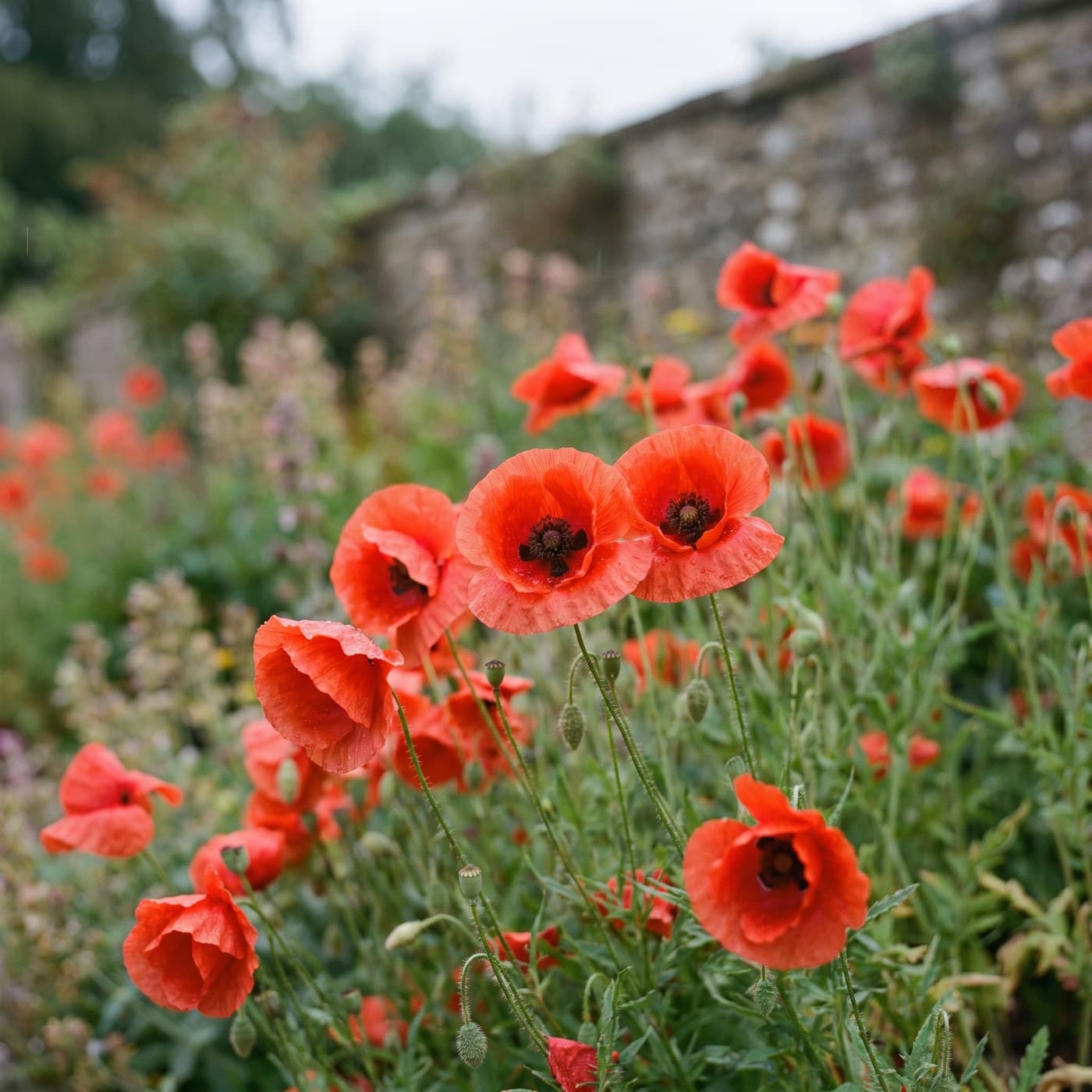
Field & Shirley Poppy Mix Seed Pack
Papaver rhoeas
A scatter-and-walk-away superbloom of silk poppies.
1,000 seeds per pack · one-off purchase, no subscription
- 1,000 seeds, hand-packed in a labelled inner packet with a printed quick-start card
- Dispatched within 1–3 business days, tracked, to any UK address
- Germination guarantee: if they don't sprout, we send them again
Why grow it
- The easiest sowing there is: scatter on raked bare soil, press in, don't cover — poppy seed needs light to germinate
- A winter scatter lets the cold do the work; a March scatter flowers by summer — either way, no digging
When to sow
Scatter on bare soil in a mild spell this winter, or from March — never buried.
| Scotland & the North | Scatter on bare, raked soil from March — never buried |
|---|---|
| Midlands, Wales & Northern Ireland | Scatter on bare soil in a mild spell this winter, or from March — never buried |
| South of England | Scatter on bare soil in a mild spell this winter, or from March — never buried |
Growing questions
Why must the seed stay on the surface?
Poppy seed is triggered by light — bury it and it simply waits underground. Rake the soil loose, scatter, press the seed in with a board or your palm so it makes contact, and don't cover it. That's the whole technique.
What does winter do to the seed?
A winter scatter lets the cold and the freeze-thaw cycles settle the seed into the surface and break its dormancy, so it comes up with the first warmth. Scattered from March instead, it germinates as the soil warms and flowers a little later in summer. Both work — the one rule is never to bury it.
Will they really come back next year?
If you let a few seed pods ripen and shake them where you want flowers, yes — field and Shirley poppies are famous self-seeders. One good year can start a patch that renews itself for seasons.
Which poppies are in the mix?
Papaver rhoeas in two forms: the wild red field poppy and the Shirley strain — the cottage-garden selection bred from it by a Victorian vicar — in whites, pinks, corals and picotee edges. Ornamental, garden-safe, and hardy.